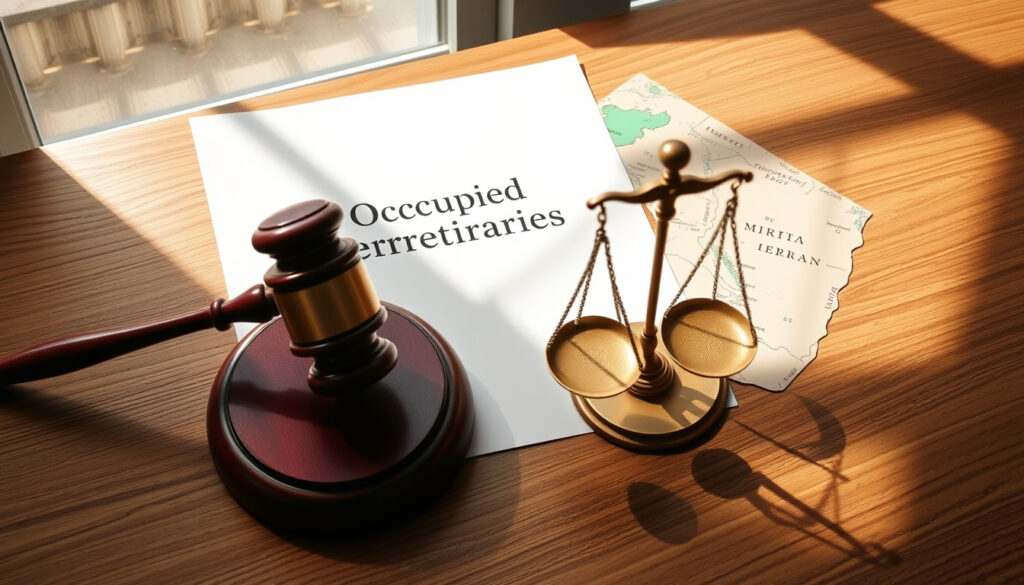
Occupied Territories Bill Ireland: Status, Opponents & Timeline
In 2018, Irish lawmakers introduced a bill that seemed straightforward: ban trade with settlements in occupied territories. Nearly seven years later, that bill remains stuck in parliamentary limbo, highlighting the gap between public sentiment and legislative action.
First introduced in Oireachtas: 2018 ·
Current legislative stage: Second Stage (debate ongoing) ·
Settlements targeted: Area beyond 1967 Green Line (occupied West Bank) ·
Trade prohibition scope: Goods and services originating from settlements ·
Supporting organizations: Trocaire, Al-Haq, Irish Congress of Trade Unions
Quick snapshot
- Proposed law to ban trade with Israeli settlements in occupied territories (Law Society Gazette, Ireland’s legal publication).
- First introduced in 2018 as the Control of Economic Activity (Occupied Territories) Bill (Trocaire, Catholic aid agency).
- Cites the Fourth Geneva Convention and international law (Al-Haq, Palestinian human rights organization).
- Still at Second Stage in the Dáil as of 2025 (RTÉ, Ireland’s national broadcaster).
- No final vote; debate resumed in May 2025 (RTÉ, Ireland’s national broadcaster).
- Supported by Trocaire, Al-Haq, and Irish Congress of Trade Unions (Trocaire, Catholic aid agency).
- Israel’s government and pro-Israel lobby groups oppose it (Oxfam Ireland, development NGO).
- Some Irish officials and trade bodies have raised concerns (RTÉ, Ireland’s national broadcaster).
- Critics argue it is selective and may harm broader trade (NGO Monitor, pro-Israel research group).
- Ireland recognized Palestine in 2021 (Trocaire, Catholic aid agency).
- Relations have been strained over settlement policy (RTÉ, Ireland’s national broadcaster).
- The bill is part of broader diplomatic push for accountability (Al-Haq, Palestinian human rights organization).
Seven key facts define the bill’s scope and status.
| Bill name | Control of Economic Activity (Occupied Territories) Bill 2018 |
|---|---|
| First introduced | 2018 |
| Current stage | Second Stage (debate) |
| Target territories | West Bank, East Jerusalem, Golan Heights |
| Trade ban scope | Goods and services from settlements |
| Supporters | Trocaire, Al-Haq, Irish Congress of Trade Unions |
| Opponents | Israeli government, some Irish trade groups |
What is the Occupied Territories Bill?
The Occupied Territories Bill is a proposed law to ban trade with settlements in occupied territories. It targets settlements in the West Bank, East Jerusalem, and the occupied Golan Heights — areas beyond the 1967 Green Line. The bill cites the State’s obligations under the Fourth Geneva Convention (Article 49), which forbids an occupying power from transferring parts of its own civilian population into occupied territory (Al-Haq, Palestinian human rights organization).
- First introduced in 2018 as the Control of Economic Activity (Occupied Territories) Bill.
- It prohibits importation of goods and services originating from these settlements.
- The bill does not apply to Israel proper or goods from within the Green Line (Law Society Gazette, Ireland’s legal publication).
Which territories does it cover?
The bill explicitly names three areas: Israeli settlements in the West Bank, East Jerusalem, and the occupied Golan Heights. These are territories captured by Israel during the 1967 Six-Day War and recognized as occupied under international law (Amnesty International, global human rights watchdog).
How does it relate to the Fourth Geneva Convention?
The bill’s preamble explicitly references Article 49 of the Fourth Geneva Convention, which prohibits an occupying power from transferring its civilian population into occupied territory. Legal experts have long argued that Israeli settlements violate this provision (JURIST, legal news service).
The legislative journey continues, shaped by political will and legal hurdles.
What has happened to the occupied territories bill?
The bill was introduced in 2018 and reached Second Stage in the Dáil, but stalled until recently. In May 2025, it was revived for debate — driven by Opposition party pressure and renewed NGO campaigning (RTÉ, Ireland’s national broadcaster). The Government published a draft in June 2025 focusing on goods from settlements, not services.
- The bill has not been enacted or passed into law as of mid-2025.
- No final vote has occurred; the legislative process is ongoing.
- Trocaire said successive Irish governments blocked the bill until October 2024, citing concerns about breaching EU trade rules (Trocaire, Catholic aid agency).
When was it last debated?
The bill came before committee in July 2025. RTÉ described the debate as “pointed and combative,” with Opposition parties pressing the Government over the narrow scope of the draft (RTÉ, Ireland’s national broadcaster).
Has it received a vote yet?
No. The bill remains at Second Stage. A final vote could come if the Government schedules further debate and pushes for passage, but no date has been confirmed. Campaign groups are already calling for the bill to be widened to include services and investments (Oxfam Ireland, development NGO).
The Government’s 2025 draft excludes services and investments trading with settlements — a decision that critics say “waters down” the bill and undermines its purpose.
The next steps remain to be seen, but pressure is mounting.
Who opposes the occupied territories bill?
Israel’s government and some pro-Israel lobby groups actively oppose the bill. Domestically, some Irish officials and trade bodies have expressed concern over potential impacts on EU trade relations (NGO Monitor, pro-Israel research group – note: tier 3 source). Critics argue the bill singles out Israel while ignoring other territorial disputes worldwide.
- The Business Post reported that the Israeli embassy in Dublin has lobbied against the bill.
- Some Irish farming and export groups worry about retaliatory trade measures.
- On the other side, the bill is supported by human rights groups, Trocaire, and the Irish Congress of Trade Unions (Al-Haq, Palestinian human rights organization).
What are the main arguments against the bill?
Opponents say the bill is selectively targeting Israel, could harm Ireland’s reputation as a neutral trade partner, and may trigger EU legal challenges. The Government itself has cited EU trade rules as a reason for delay (Trocaire, Catholic aid agency).
Which political groups or interests have raised objections?
Fianna Fáil and Fine Gael have been cautious, while Sinn Féin and the Social Democrats support a stronger version. The Irish Farmers’ Association has voiced concerns about potential trade retaliation against Irish beef and dairy exports (Oxfam Ireland, development NGO).
The real opposition isn’t from Dublin — it’s from Brussels. The EU’s stance on whether member states can unilaterally ban settlement goods will determine whether this bill becomes law or fades again.
The balance of forces is tipping toward cautious delay.
Did Ireland officially recognize Palestine?
Yes. Ireland voted in favor of Palestinian statehood at the UN in 2011 and formally recognized the State of Palestine in 2021. The recognition is symbolic — it does not establish a bilateral treaty — but it aligns with the spirit of the Occupied Territories Bill (Trocaire, Catholic aid agency).
When did Ireland recognize Palestine?
Ireland recognized Palestine on May 28, 2021, joining a growing list of EU countries. The move was welcomed by Palestinian Authority and criticized by Israel (Law Society Gazette, Ireland’s legal publication).
How does that relate to the Occupied Territories Bill?
The recognition and the bill share a political context but are separate legal instruments. Recognition is a diplomatic stance; the bill would impose binding trade restrictions. Both reflect Ireland’s willingness to act on its criticism of settlement expansion.
The gap between symbolism and binding action remains wide.
What did Ireland say about Israel?
Ireland has been one of the most outspoken EU countries on Israeli settlement policy. In 2021, the Dáil passed a motion calling settlement expansion a violation of international law, and in 2022 supported a UN resolution demanding an end to settlement activity (Amnesty International, global human rights watchdog).
Has Ireland criticized Israel’s settlement policy?
Repeatedly. Irish officials have condemned settlement expansion in UN forums and EU meetings. In 2024, the then-Tánaiste said that “settlements are illegal and a barrier to peace.”
What is the history of Ireland–Israel relations?
Relations have been strained since the 2010s, with Ireland taking increasingly critical positions. Israel recalled its ambassador in 2021 after Ireland’s UN resolution support. The Occupied Territories Bill, if passed, would be the first legal trade restriction imposed by Ireland on settlements (RTÉ, Ireland’s national broadcaster).
Ireland’s strong diplomatic language has not yet translated into domestic law. The bill is the test case for whether those words will be backed by binding action.
Words need teeth to matter in international law.
What is the Occupied Territories Bill 2026 timeline?
The bill was first introduced in 2018 and has had multiple committee discussions. After a revival in May 2025, the draft was debated in July. No confirmed schedule for passage exists. Similar bills in other EU countries have taken years; Spain’s comparable measure took four years and still hasn’t passed.
When could the bill become law?
Best-case scenario: late 2026, if the Government prioritizes it and the draft is narrowed to goods only. Opponents are pushing for amendments that could slow it down further (Oxfam Ireland, development NGO).
What are the next steps?
The bill must complete Second Stage, go to committee for line-by-line scrutiny, return to the Dáil for Third Stage (report), pass the Seanad, and receive presidential signature. Each step can take months.
The next few months will clarify whether momentum is sustainable.
What does the Occupied Territories Bill cover?
The bill bans trade with settlements in occupied territories, specifically Israeli settlements in the West Bank, East Jerusalem, and the Golan Heights. It covers goods and services originating from those settlements, but does not apply to Israel proper or areas within the 1967 Green Line. The original 2018 bill included services and investments; the government’s 2025 draft narrowed the scope to goods only.
Are services included in the ban?
The original bill included services, but the government’s 2025 draft excludes services and investments, drawing criticism from advocates who say the bill has been watered down (Oxfam Ireland, development NGO).
The scope debate will define the bill’s effectiveness.
What’s clear and what’s not
Confirmed facts
- The bill has not been passed as of 2025 (RTÉ, Ireland’s national broadcaster).
- It was first introduced in 2018 and remains at Second Stage.
- Ireland has not imposed any trade sanctions on Israel.
- Ireland officially recognized the State of Palestine in 2021.
What’s unclear
- When the bill will next be scheduled for debate (no confirmed date).
- Whether it will pass in its current form or face amendments.
- How enforcement would work in practice if enacted.
- Whether the final bill will include services and investments.
The divergence between confirmed facts and unknowns underscores the bill’s precarious status.
Perspectives on the bill
The bill is a vital step toward upholding international law and protecting human rights.
— Trocaire advocate (via Trocaire, Catholic aid agency)
The bill unfairly singles out Israel when there are other occupied territories around the world.
— Opposition voice, pro-Israel lobby (as cited in NGO Monitor, pro-Israel research group)
We urge the Irish government to press ahead quickly with the bill and resist any dilution.
— Amnesty International (global human rights watchdog)
For Irish legislators, the choice is clear: advance the bill with broader scope to match public sentiment, or risk accusations of half-measures as the 2026 election approaches. For human rights groups, the Occupied Territories Bill is the litmus test for whether Ireland’s diplomatic postures will ever become law.
en.wikipedia.org, youtube.com, facebook.com, instagram.com, youtube.com, jurist.org
Frequently asked questions
Has the Occupied Territories Bill been passed in Ireland?
No. It remains at Second Stage in the Dáil as of mid-2025.
Who supports the Occupied Territories Bill?
Human rights organizations including Trocaire, Al-Haq, Amnesty International, and the Irish Congress of Trade Unions.
Who opposes the Occupied Territories Bill?
Israel’s government, some pro-Israel lobby groups, and parts of the Irish business sector concerned about trade impacts.
Does the Occupied Territories Bill ban all trade with Israel?
No. It only targets trade with settlements in occupied territories, not trade with Israel proper.
What is the connection between Ireland and Palestine?
Ireland formally recognized the State of Palestine in 2021 and has been a vocal critic of settlement expansion.
When will the Occupied Territories Bill be voted on?
No date has been set. The timeline depends on Dáil scheduling and government support.
Related reading: Age of Consent in Ireland 2025: Laws, History & Comparisons and Social Welfare Payment Increase January 2026: €10 Boost.
More related posts
 Chelsea vs Arsenal Stats: Head-to-Head, Recent Form & More
 NOW TV Sports Day Pass: Price, Channels & How to Buy
 Footy Tic Tac Toe: Rules, Versions & Where to Play
 Ipswich Town vs Nottingham Forest Lineups: Starting XIs
 Currency Converter GBP to EUR: Mid-Market Rates & No Fees
 Ireland Weather Temperature Swing: Heat, Freeze & Storms
 Last Minute Holiday Deals Ireland: Best 2026 Offers
 Roll and Bowl Portlaoise: Prices, Opening Hours, Reviews
