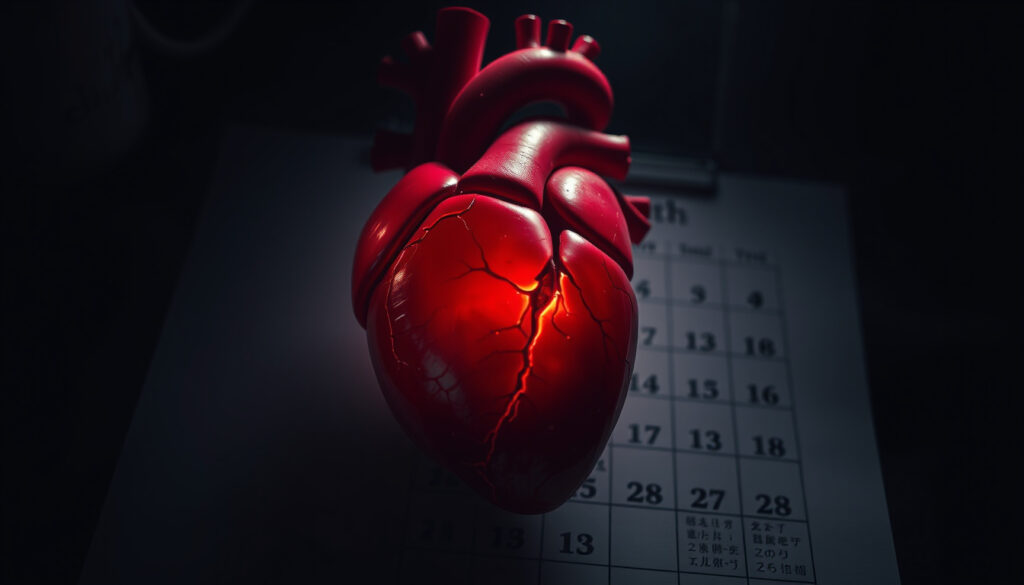
6 Signs of Heart Attack a Month Before: Early Warnings
The warning signs of a heart attack rarely announce themselves with dramatic clarity. Instead, they often creep in quietly—unusual fatigue, mild shortness of breath, a strange sense of unease that builds over weeks. Yet the signals that something is wrong can appear long before the crisis point, giving those who recognize them a critical window of time to act.
Heart disease deaths yearly: 17.9 million (WHO) · Warning signs can appear: 1 month before · Silent heart attacks occur in: up to 45% of cases (Mayo Clinic) · Women experience different signs: often subtler · Top risk reduction: quit smoking, exercise
Quick snapshot
- Chest discomfort or pressure (angina) that persists and doesn’t resolve with rest may appear weeks ahead (Mayo Clinic)
- Extreme fatigue and shortness of breath are among the most commonly reported early signals (American Heart Association)
- Symptoms may start slowly and worsen over hours, days, or weeks before the acute event (Brown Health)
- The exact timeline varies significantly from person to person; some may have warning signals for only a few days
- The precise combination of “weird” symptoms that best predicts an impending attack remains individual
- Whether certain prodromal symptoms are more predictive than others is not yet fully established
- Prodromal symptoms can appear up to a month before the cardiac event, according to the BaleDoneen Method
- Symptoms typically start slowly and worsen progressively before the acute phase, per Mayo Clinic
- 95% of women experience prodromal symptoms weeks or months before a cardiac event (Manhattan Cardiology)
- Call 911 immediately for any suspected signs; do not wait to see if symptoms resolve (American Heart Association)
- If early warning signs are recognized, prompt medical evaluation may prevent the acute event (American Heart Association)
- Diagnostic tests like ECG or troponin blood tests can confirm or rule out a cardiac event in progress (American Heart Association)
Research from the American Heart Association shows that a heart attack occurs every 40 seconds in the United States, and heart disease remains the leading cause of death for women in this country.
| Label | Value |
|---|---|
| Duration of warnings | Up to 1 month |
| Silent attacks percentage | 22–45% |
| Top sign: Fatigue | Persistent and unusual |
| Key test | ECG or troponin blood test |
| Heart attacks in US | Every 40 seconds (AHA) |
| Women prodromal symptoms | 95% experience early signals |
How long can your body warn you before a heart attack?
The body does not always wait for the last moment to signal distress. Mayo Clinic research confirms that heart attacks may begin with subtle symptoms hours, days, or weeks in advance—not always the dramatic chest-grabbing pain movies portray. The BaleDoneen Method notes that prodromal symptoms can appear up to a week or two before, sometimes a full month ahead, giving those who pay attention a potential window to seek care before the acute event.
Timeline of warnings
For many people, the warning signs follow a recognizable progression. Weeks before the attack, subtle fatigue or shortness of breath may surface during everyday activities. In the days leading up, symptoms can intensify—chest pressure that once came and went may start lingering. Hours before the acute event, the body often issues more urgent signals, though these can still be mistaken for indigestion, anxiety, or muscle strain.
Factors influencing duration
Research from Brown Health indicates that symptoms may start slowly and worsen over hours, days, or weeks before the event, making the timeline highly individual. Women tend to have more varied symptom profiles, which can delay recognition. Age, diabetes status, and prior cardiac history all influence how clearly the body communicates its distress.
The implication: the “wait and see” instinct can be dangerous. What feels like a mildly upset stomach today may be part of a larger pattern building toward a crisis.
Heart attacks in the United States occur every 40 seconds, according to the American Heart Association. The window before the acute event is when prevention is still possible—recognizing subtle warning signs and calling for help immediately can be the difference between surviving a close call and a life-threatening emergency.
What are four weird things that happen right before a heart attack?
Beyond the textbook symptoms, the body sometimes sends signals that seem unrelated to the heart. The BaleDoneen Method highlights several lesser-known indicators that people often dismiss as benign until it’s too late.
Unusual fatigue
Feeling exhausted after a full night’s sleep or experiencing fatigue that limits activities you’ve always handled easily can be an early warning sign. Manhattan Cardiology notes that extreme or unusual fatigue even without physical activity is one of the most frequently reported signals before a heart attack, particularly in women.
Indigestion or nausea
Digestive issues like heartburn, nausea, or indigestion that come on without a clear dietary cause can mask a cardiac event in progress. The BaleDoneen Method points out that these symptoms frequently get misattributed to stomach problems, delaying critical evaluation.
Sweating without cause
Breaking out in a cold sweat when you’ve been sitting still in a cool room—unrelated to heat, exercise, or anxiety—is a red flag. Research from Manhattan Cardiology identifies cold and excessive sweating as a common early indicator, especially in women.
Dizziness
Feeling lightheaded, dizzy, or weak without exertion may signal reduced blood flow weeks before the acute event. BaleDoneen Method notes that these symptoms are often rationalized as low blood sugar, standing up too fast, or simply being overtired.
What this means: paying attention to “weird” symptoms in context matters. A single episode might be nothing; a pattern that persists for weeks alongside other subtle signals deserves medical attention.
Digestive symptoms and unusual fatigue are among the most commonly ignored early signs. Patients frequently attribute them to stress, diet, or normal aging, which is precisely why 64% of women who die suddenly of coronary heart disease had no previous symptoms, per the American Heart Association.
Chest pain or pressure (angina) that keeps happening and doesn’t go away with rest may be an early warning sign. — Mayo Clinic
What are the four silent signs of a heart attack in a woman?
Women’s heart attack symptoms often differ from the classic presentation most people recognize. According to the American Heart Association, women are more likely to experience a wider range of atypical symptoms that can be subtle and easy to overlook.
Shortness of breath
Feeling winded after climbing a flight of stairs when you’ve done it countless times before—or experiencing shortness of breath at rest—can be an early signal. Brown Health identifies shortness of breath as one of the primary early warning signs in women, often appearing when the heart struggles to pump efficiently.
Chest tightness
While chest pain is the most common heart attack symptom overall, women may describe it differently—often as upper back pressure, a squeezing sensation, or a feeling of fullness rather than crushing pain. American Heart Association confirms that women’s most common heart attack symptom is chest pain or discomfort, though the description varies.
Jaw or back pain
Pain radiating to the jaw, neck, upper back, or shoulders is more common in women than men. Mayo Clinic YouTube content highlights shortness of breath, back/shoulder blade/jaw/neck pain as key indicators in women that often get misdiagnosed as musculoskeletal issues.
Persistent fatigue
Feeling unusually tired after minimal exertion or struggling with energy levels that don’t improve with rest deserves attention. Community Medical notes that women experience chest pressure/tightness, unusual fatigue, and shortness of breath at rest as early signs that are frequently attributed to other causes.
Women are also more likely to ignore their symptoms. — Dr. Eduardo Sanchez, American Heart Association If you’re experiencing persistent fatigue or unusual tiredness, it’s important to pay attention to these signs, and you can learn more about early signs of a heart attack here: Ont i skulderbladet strålar armen.
What is a silent heart attack?
A silent heart attack, sometimes called a “mini” heart attack, involves symptoms so mild or brief that the person doesn’t realize what is happening. Mayo Clinic explains that heart attacks may begin with subtle symptoms hours, days, or weeks in advance—not always dramatic chest pain—which makes silent attacks particularly dangerous because they often go unrecognized until follow-up testing reveals cardiac damage.
Definition and risks
According to Mayo Clinic research, women, older adults, and diabetics may have atypical symptoms like nausea, brief neck/back pain, or mild discomfort that doesn’t fit the classic picture. The Mayo Clinic News Network reports that 64% of women who die suddenly of coronary heart disease had no previous symptoms—which means the absence of obvious pain doesn’t mean the absence of danger.
Symptoms vs. typical attack
Where a typical heart attack might involve crushing chest pressure, a silent attack may present as mild indigestion, slight jaw ache, or a vague sense of not feeling well. Mayo Clinic notes that chest pain or pressure (angina) that persists and doesn’t resolve with rest may be an early warning sign hours, days, or weeks in advance. The takeaway: any persistent discomfort that feels “off” deserves a 911 call.
The implication: silent heart attacks account for 22–45% of all cardiac events. Those who survive one carry a significantly higher risk of a future attack, making early recognition of even subtle symptoms critically important.
Mayo Clinic research shows that women, older adults, and diabetics are most likely to experience atypical, subtle symptoms that delay recognition. If you fall into one of these groups and something feels wrong, don’t assume it “isn’t your heart”—call 911 and let medical professionals make that determination.
What is the best test to check for heart problems?
When warning signs appear, prompt diagnostic testing can confirm or rule out a cardiac event in progress. The American Heart Association emphasizes that calling 911 immediately for any suspected signs is the first and most critical step—do not drive yourself to the hospital or wait to see if symptoms resolve.
ECG basics
An electrocardiogram (ECG or EKG) records the heart’s electrical activity and can reveal patterns indicative of a heart attack, damage, or reduced blood flow. This test is typically performed in the ambulance or emergency department and provides immediate information that guides treatment decisions.
Stress tests
If symptoms are present but the ECG is normal, a stress test—where the heart is monitored while you walk on a treadmill or receive medication to simulate exertion—may reveal problems not visible at rest. This helps identify coronary artery disease that could lead to a future attack.
Blood tests for markers
Troponin blood tests measure proteins released when heart muscle is damaged. Elevated troponin levels provide strong evidence of a heart attack in progress and help medical teams determine the urgency and type of intervention needed.
The trade-off: diagnostic tests are powerful tools, but they only matter if you seek medical evaluation. Recognizing subtle warning signs and calling for help immediately puts those tools to use before permanent damage occurs.
Related reading: Micro Suction Near Me: Costs, Clinics & Locations in Ireland · What Is a Rainbow Baby? Meaning, Differences & Related Terms
youtube.com, heart.org, goredforwomen.org, heart.org, youtube.com
Subtle signs women often miss like persistent fatigue and nausea can emerge up to a month before, backed by Mayo Clinic insights.
Frequently asked questions
What comes first in a heart attack?
The earliest signs can include unusual fatigue, shortness of breath, or mild chest discomfort appearing hours to weeks before the acute event. Mayo Clinic notes that symptoms typically start slowly and worsen over time, though not everyone experiences the classic crushing chest pain first.
What hurts first before a heart attack?
Chest discomfort—often described as pressure, fullness, squeezing, or burning—is the most common first signal. However, women frequently report that pain in the arms, shoulders, back, neck, or jaw appears before chest pain. American Heart Association emphasizes that for women, upper back pressure or jaw pain can be among the earliest indicators.
How do you know if you’re having a mini heart attack?
A “mini” or silent heart attack may involve mild chest discomfort, shortness of breath, nausea, or fatigue that gets mistaken for other conditions. American Heart Association advises calling 911 immediately for any suspected signs—do not wait to see if symptoms resolve.
What are three weird symptoms of an oncoming heart attack?
Beyond typical chest pain, unusual early indicators include sudden swelling in the feet or ankles from reduced blood flow, unexplained indigestion or heartburn-type discomfort, and cold sweats unrelated to temperature or exercise. BaleDoneen Method highlights these as frequently overlooked warning signals that appear weeks before the acute event.
What is a pre-heart attack?
A “pre-heart attack” is not a medical term but refers to the prodromal phase—early warning signs appearing weeks to months before the actual cardiac event. BaleDoneen Method describes this as a window when subtle symptoms like fatigue, shortness of breath, or digestive changes may signal an impending attack.
6 signs of heart attack a day before?
Symptoms often intensify in the 24 hours before a heart attack. Mayo Clinic notes that chest pain or pressure that persists despite rest, worsening shortness of breath, cold sweats, and nausea that escalates are typical signs that the acute phase is imminent.
One month before a heart attack feet swelling?
Foot and ankle swelling can occur as reduced blood flow causes fluid to accumulate in the lower extremities. BaleDoneen Method notes this as one of the unusual warning signs that may appear weeks before a cardiac event, though it can have many causes.
More related posts
 Stopping by Woods on a Snowy Evening: Analysis & Meaning
 TV Listings Tonight Ireland: RTÉ, Virgin Media Guide
 Wall Street Journal: Ownership, Bias, Credibility & Audience
 Best Hotels in Dublin City Centre: Top Picks & Guides
 Where to Watch F1: Free & Paid Options for 2026
 Six Nations 2025 Fixtures: Full Schedule & TV Info
 AS Roma vs AC Milan 2026 Lineups: 3-4-2-1 vs 3-5-2
 Dublin to Limerick Bus: Timetables, Prices & Operators (2025)
