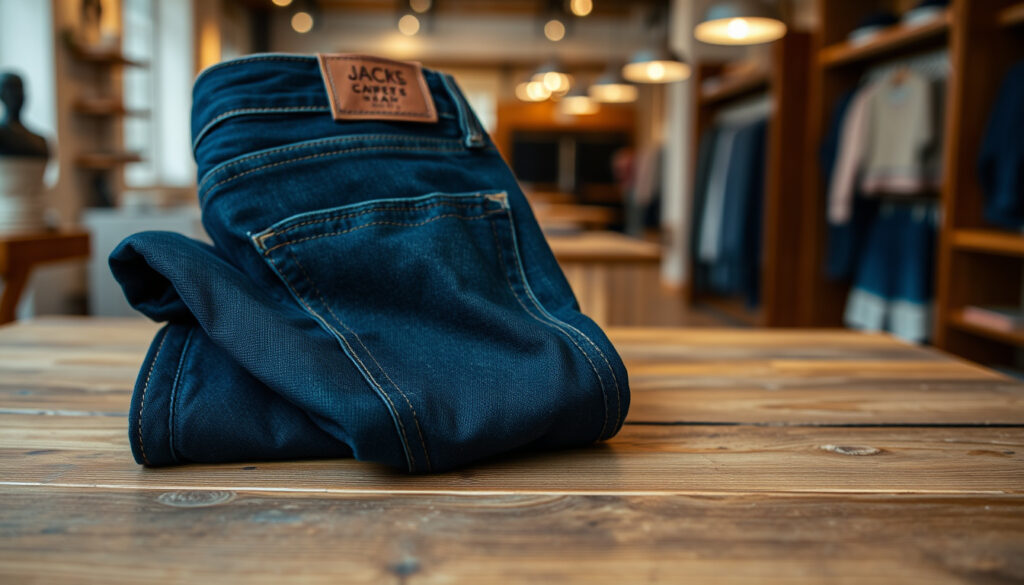
Jack & Jones Jeans: Are They Luxury? Fit, Origin & Top Brands
Buying jeans online is a gamble — until you know the brand. Jack & Jones, the Danish denim label founded in 1990, has built a global following by offering modern fits at prices that won’t make you wince. This guide cuts through the confusion: who makes them, where they’re from, how they fit, and how they compare to the biggest names in denim.
Founded: 1990 ·
Parent company: Bestseller A/S ·
Headquarters: Denmark ·
Price range: $50–$150 ·
Available in: 40+ countries ·
Fit types: Slim, skinny, straight, baggy
Quick snapshot
- Founded in 1990 in Denmark (Jack & Jones official site)
- Part of Bestseller A/S (Bestseller corporate site)
- Global presence in 40+ countries (Jack & Jones official site)
- Slim fit – snug through thigh (Jack & Jones Fit Guide)
- Skinny – tight leg (Jack & Jones Fit Guide)
- Straight – classic cut (Jack & Jones Fit Guide)
- Baggy – loose from hip (Jack & Jones Fit Guide)
- Typical jeans: $50–$150
- Sales often bring prices to $30–$70
- Comparable to Levi’s, Lee
- Designed in Denmark (Jack & Jones official site)
- Manufactured in Asia, Eastern Europe (Jack & Jones official site)
- Headquarters in Brande, Denmark (Jack & Jones official site)
| Label | Value |
|---|---|
| Founded | 1990 |
| Parent company | Bestseller A/S |
| CEO | Christian Iversen (Bestseller Group) |
| Headquarters | Brande, Denmark |
| Number of stores | Over 1,000 globally |
| Sister brands | Only & Sons, Selected Homme, Vero Moda |
The pattern: Jack & Jones competes on value and fit variety, not on heritage or exclusivity. That’s a deliberate choice that works for its target audience of style-conscious men who want multiple pairs without breaking the bank.
Is Jack & Jones a luxury brand?
Jack & Jones is not a luxury brand. It sits firmly in the affordable premium segment, with jeans typically priced between $50 and $150 — well below the $200+ threshold that defines luxury denim from houses like Gucci or Balenciaga. The brand’s own positioning, as stated on its Jack & Jones official site (brand homepage), emphasizes “real, comfortable & ready for anything” rather than exclusivity or high price tags.
Jack & Jones pricing
- Standard jeans: $50–$150
- Sale prices: often $30–$70
- Comparable to Levi’s, Lee, and Gap — not luxury
Comparisons with premium denim brands
When placed next to premium denim brands like Diesel or G-Star Raw, Jack & Jones undercuts them by 20–40% on average. A pair of Diesel jeans typically starts around $180, while Jack & Jones rarely exceeds $150. The trade-off: less premium denim weight and fewer heritage details, but a much more accessible price point for everyday wear.
Jack & Jones is an affordable premium brand, not luxury. For shoppers who want modern fits without the $200+ price tag, it’s a strong mid-market option — similar to Levi’s or Gap in positioning.
The implication: Jack & Jones competes on value and fit variety, not on heritage or exclusivity. That’s a deliberate choice that works for its target audience of style-conscious men who want multiple pairs without breaking the bank.
Who makes Jack and Jones jeans?
Jack & Jones is owned by Bestseller A/S, a Danish fashion conglomerate that also owns brands like Only & Sons, Selected Homme, and Vero Moda. The Bestseller corporate site (parent company) describes Jack & Jones as a “strong global brand with a focus on affordable denim fashion.”
Parent company Bestseller A/S
- Founded in 1975 by Troels Holch Povlsen
- Headquartered in Brande, Denmark
- Operates over 2,700 stores across 70+ markets
- Jack & Jones is one of its flagship brands
Manufacturing locations
Design and development happen in Denmark, but manufacturing takes place across multiple countries including China, Bangladesh, and Turkey. This global production model is standard for mid-market fashion brands and allows Jack & Jones to keep prices competitive while maintaining quality control from its Danish design team.
The split between Danish design and Asian/Eastern European manufacturing is the engine behind Jack & Jones’s price point. You get European styling at a fraction of the cost of fully European-made denim.
The catch: while the design team is in Denmark, the exact percentage of jeans made in each country is not publicly disclosed. This lack of transparency is common in the industry but worth noting for shoppers who prioritize local manufacturing.
What country is Jack & Jones from?
Jack & Jones was founded in Denmark in 1990 and remains headquartered in Brande, Denmark. The brand’s European identity is central to its marketing — it positions itself as a modern European alternative to American denim giants like Levi’s.
Headquarters in Denmark
- Founded in 1990 in Denmark
- Headquarters: Brande, Denmark
- Part of the Bestseller group, also Danish
European identity
Initially sold only in Scandinavia, Jack & Jones has expanded to over 40 countries. Its European roots influence its fit philosophy: generally slimmer and more tailored than American cuts, which tend to be roomier. This is a key differentiator for shoppers who find American brands too loose.
The pattern: Jack & Jones uses its Danish heritage as a quality signal, much like how Swedish and Danish furniture brands leverage Scandinavian design cachet. It’s a genuine origin story, not a marketing gimmick.
Is Jack and Jones small fitting?
The short answer: it depends on the fit. Jack & Jones offers multiple fit families — skinny, slim, regular, comfort, and loose — and each behaves differently. According to the Jack & Jones Fit Guide (official size guide), slim fit styles tend to be snug through the thigh, while baggy fits are intentionally roomy.
Fit variations by style
- Skinny: Tight from hip to ankle — runs small, size up if between sizes
- Slim: Snug through thigh, tapered below knee — true to size for most
- Regular: Straight through leg — runs true to size
- Comfort: Relaxed through seat and thigh — slightly roomy
- Loose: Baggy from hip down — runs large
Size guide recommendations
Independent reviewers and the brand’s own size guide recommend checking the specific fit’s measurements rather than relying on your usual size. For example, a YouTube comparison (slim-fit jeans review) tested the Jack & Jones Glenn slim fit alongside Levi’s 511 and found the Jack & Jones pair ran slightly slimmer in the thigh.
Sizing consistency across different years and production batches is not guaranteed. If you’re buying online, check the size guide on the official site or retailer for the specific style — don’t assume your last pair’s size will fit the next one.
The trade-off: Jack & Jones’s fit variety is a strength for shoppers who know what they want, but a source of confusion for those who don’t. The brand’s fit families are more numerous than Levi’s (which uses lot numbers), so comparing across styles requires more homework.
What are the top 10 jeans brands?
Industry lists of top jeans brands typically include Levi’s, Wrangler, Lee, Diesel, G-Star Raw, Calvin Klein, Tommy Hilfiger, Ralph Lauren, Uniqlo, and Jack & Jones. Jack & Jones earns its spot through its combination of modern fits, European design, and accessible pricing.
How Jack & Jones ranks among them
Jack & Jones is often included in “affordable premium” lists — brands that offer quality above fast fashion but below luxury. It differs from luxury brands like Gucci or Balenciaga in both price (by a factor of 3–5x) and positioning. The Levi’s Men’s Jeans Guide (official brand guide) shows how American brands use heritage and lot numbers to differentiate; Jack & Jones competes on fit variety and modern styling instead.
Key competitors
The pattern: three brands, one comparison — Jack & Jones versus Levi’s and Uniqlo on price, fit, and origin.
| Brand | Price Range | Fit Philosophy | Origin | Key Differentiator |
|---|---|---|---|---|
| Jack & Jones | $50–$150 | Multiple fit families (skinny to loose) | Denmark (design) | European modern fits at mid-market prices |
| Levi’s | $50–$200 | Lot numbers (501, 511, 510) | USA (heritage) | Heritage brand with standardized sizing |
| Uniqlo | $30–$80 | Simple fits (slim, regular, wide) | Japan | Budget-friendly basics with consistent sizing |
The implication: Jack & Jones occupies a specific niche — European design, modern fits, and prices that undercut heritage American brands while offering more variety than budget Japanese basics. For shoppers who want something between fast fashion and premium denim, it’s a natural fit.
Confirmed facts vs. what’s unclear
Confirmed facts
- Jack & Jones was founded in 1990 in Denmark (Jack & Jones official site)
- Jack & Jones is owned by Bestseller A/S (Bestseller corporate site)
- Jeans are produced in multiple countries including China, Bangladesh, Turkey
- Price range is $50–$150, below luxury denim
- Available in 40+ countries
What’s unclear
- Exact percentage of jeans made in each country
- Consistency of sizing across all fits and production years
- Specific denim weight and fabric composition for each style
What the brand says
“We keep it real, comfortable & ready for anything.”
Jack & Jones official site (brand homepage)
“A strong global brand with a focus on affordable denim fashion.”
Bestseller A/S annual report (parent company)
Summary
Jack & Jones delivers what it promises: modern European denim at prices that undercut heritage American brands by 20–40%. The brand’s strength is its fit variety — from skinny to baggy — but that same variety creates sizing confusion for online shoppers. For the buyer in Ireland or anywhere else looking for a reliable mid-market jean that won’t cost a week’s wages, the choice is clear: check the fit guide for each style, compare measurements, and treat Jack & Jones as what it is — an affordable premium brand, not a luxury one.
The implication: Jack & Jones makes modern European denim accessible, but only if you do your fit homework first.
For a more detailed fit and origin guide, see our extensive review of Jack & Jones jeans at detailed fit and origin guide.
Frequently asked questions
Are Jack & Jones jeans sustainable?
Jack & Jones has introduced some sustainable initiatives, including using organic cotton and recycled materials in select collections. However, the brand does not publish comprehensive sustainability reports like some premium competitors. For specific sustainability claims, check the product page or contact customer service.
What is the return policy for Jack & Jones jeans?
Return policies vary by retailer. On the official Jack & Jones site, returns are typically accepted within 30 days for unworn items with tags attached. Check the specific retailer’s policy before purchasing.
Do Jack & Jones jeans shrink after washing?
Like most denim, Jack & Jones jeans can shrink slightly — especially if washed in hot water or dried on high heat. To minimize shrinkage, wash in cold water and air dry. The brand’s cotton-rich blends are more prone to shrinkage than stretch denim.
Can I find Jack & Jones jeans for women?
Jack & Jones is primarily a men’s brand. For women’s denim, Bestseller A/S owns Vero Moda and Only, which offer similar styling and price points for women.
How often does Jack & Jones release new collections?
Jack & Jones releases new collections seasonally, with frequent mid-season drops. New styles typically arrive every 4–6 weeks, with major collections in spring and fall.
Does Jack & Jones offer plus sizes?
Jack & Jones offers extended sizes up to 42W in many styles, but availability varies by fit and retailer. Check the size guide on the official site for specific measurements.
Are Jack & Jones jeans machine washable?
Yes, Jack & Jones jeans are machine washable. The brand recommends washing inside out in cold water and avoiding bleach to preserve color and fit.
More related posts
 TV Listings Tonight Ireland: RTÉ, Virgin Media Guide
 How to Get Blood Out of Clothe : 5 Method That Actually Work
 Things to Do in Puerto del Carmen: Beaches, Markets & Nightlife
 Great Movies Action TV Guide: Free Schedules Today
 Cafes in Reykjavík Iceland: Best Coffee & Bakeries
 Sofia Black-D’Elia: Biography, Ethnicity, and Facts
 Ipswich Town vs Nottingham Forest Lineups: Starting XIs
 Tuam Mother and Baby Home: 2026 Excavation & Compensation
